
The Material Shift: How New-Age Materials Are Redefining Commercial Architecture
Every era of architecture is defined by the materials that built it.
From stone and timber to steel and glass — materials have always shaped how we construct, how we design, and ultimately, how we live.
But today, a quiet revolution is underway.
In commercial construction, new-age materials are changing not just the look of buildings, but their performance, sustainability, and lifespan.
The Changing Face of Construction
Modern materials aren’t just about durability or cost. They represent a shift in how we view buildings — not as static structures, but as adaptive systems that respond to climate, energy, and human needs.
The goals have evolved too:
- From stronger to smarter
- From permanent to sustainable
- From impressive to impactful
And the materials we choose tell that story.
- Sustainable Alternatives: Building for the Planet
The construction industry contributes nearly 40% of global carbon emissions, a figure that’s driving builders to rethink their material palette.
- Low-Carbon Concrete (LC3): Made using limestone and calcined clay, LC3 cement cuts emissions by up to 40% while maintaining strength.
- Recycled Steel and Aggregates: Reduce waste and energy use during production.
- Bamboo Composites and Engineered Timber: Offer strength and flexibility with a fraction of the carbon footprint.
In Kerala and other tropical regions, locally sourced laterite, clay tiles, and natural stone are making a comeback — blending traditional aesthetics with modern performance.
- Smart Glass and Dynamic Facades
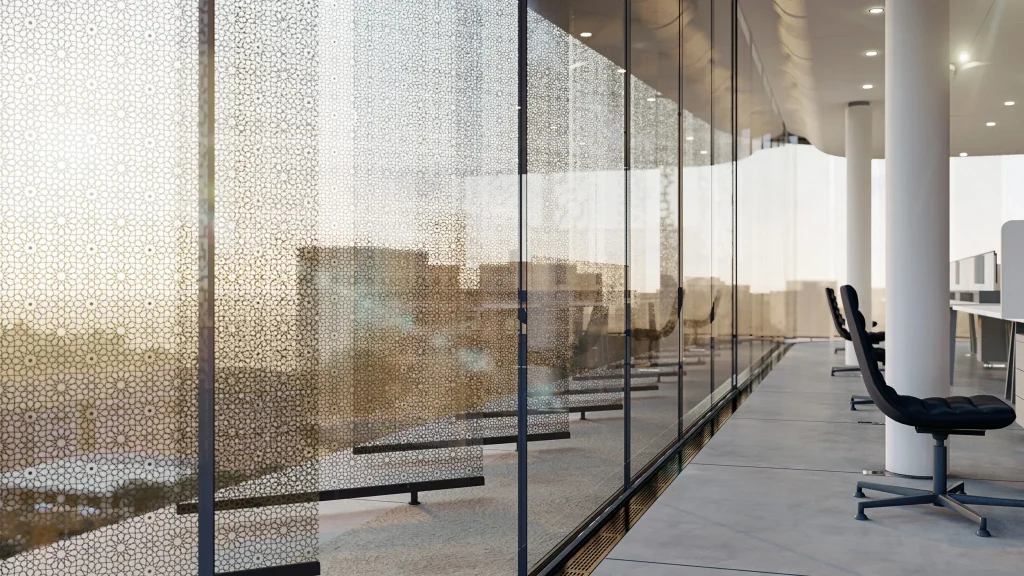
In modern commercial buildings, glass is no longer a passive material — it’s a smart skin.
Electrochromic and photochromic glass can automatically adjust tint based on sunlight, reducing glare and heat while maintaining natural light.
Combined with shading systems and responsive facades, this improves both energy efficiency and occupant comfort.
The result? Buildings that breathe, react, and adapt in real time.
- Acoustic and Thermal Innovation
As workspaces evolve, comfort is being engineered through materials:
- Acoustic panels and micro-perforated ceilings reduce noise while maintaining aesthetics.
- Phase-change materials (PCMs) regulate indoor temperature naturally, cutting down HVAC loads.
- Advanced insulation systems combine lightweight design with high thermal performance — perfect for tropical climates like Kerala.
Comfort, efficiency, and performance — achieved not by more systems, but by smarter materials.
- Aesthetics Meet Performance
Today’s materials are not just engineered for strength — they’re crafted for expression. Textured finishes, natural fibers, metal composites, and 3D-printed claddings are opening new design possibilities. They allow architects and builders to experiment without sacrificing integrity. The modern façade is no longer just about beauty — it’s a statement of intelligence and intent.
- Longevity Through Technology
Materials now come embedded with technology — self-healing concrete that repairs cracks using bacteria, corrosion-resistant coatings, and anti-microbial surfaces that promote hygiene. For commercial builders, this isn’t just novelty. It means less maintenance, longer life cycles, and lower operational costs. Technology, in this sense, doesn’t just build faster — it builds better.
The Indian Context
In India, new material technologies are gaining momentum, especially in urban commercial projects.
Developers are looking for long-term value — buildings that perform efficiently, meet green standards, and reflect forward-thinking design.
Kerala, with its coastal climate and unique architectural heritage, presents an opportunity to combine traditional wisdom with modern material science.
The shift is already happening — from glass that thinks to concrete that breathes.
Conclusion
The materials we choose define more than the strength of a building — they define its character.
At B&M, every project is an opportunity to question: What should this building say?
Through responsible material choices, we aim to create spaces that are efficient, enduring, and expressive — buildings that not only stand the test of time but also stand for something.
Because the real shift in construction isn’t just in what we build, it’s in what we build with.
Visit us at: www.bnminfra.com
